Thursday, 26 July 2018

'SH' FOCUS
This week our Better Start phonemic awareness focus was 'sh'.
Today we watched a clip about sharks and read a non-fiction text. After which, we wrote information reports. Here are a few.


Sharks
Did you know that sharks eat little fish and seals? They have lots of sharp teeth. If one falls out, it will grow back straight away.
Also they don’t take care of their babies. They are called pups and the pups survive all by themselves.
By Jadelyn


Sharks

Did you know that sharks eat little fish and they eat seals too? Sharks have very sharp teeth and sharks use their fins to turn around.
Sharks never stop swimming. If they stop swimming they sink to the ground.
Some sharks are kind too.
By Tiffany

Sharks
Did you know that sharks eat all the little fish. Some sharks are big and some sharks are little like a fish.
Sharks live in the deep blue sea.
They can swim very well.
By Lam


Sharks

Did you know sharks eat any sea animals?
There are about 400 types of sharks.
Sharks have a good sense of smell but sharks have little eyes.
Sharks never stop swimming. If they do, they will drown and die.
By Ashley


Sharks
Did you know that sharks have lots of teeth?
Also they keep moving even when they sleep.
They don’t eat people very often. They just eat seafood instead. When fish are sleeping the sharks eat them. Sharks eat seals too.
By Will


Tuesday, 3 July 2018

'W' is for 'Worm'

'W' is one of our focus letters for this week.
Today we read our poem 'The Wiggly Worm'. We discussed what we already knew about worms  and then decided to find our more about worms.
We read a non-fiction book about worms and visited the Ilam School worm farm.

Our worm farm is situated at the back of Room 6 and 7.

Worms like our food scraps but NOT citrus like oranges or mandarins.


Ben, Connor and Lincoln from Room 1 shared their expertise about how the worm farm operates.

This is worm juice. It is the juice that comes out the bottom of the
worm farm. It is really good for growing plants. It does need to be
watered down so that it doesn't burn the plants.


Below is some of the writing we did after all our new learning and experience.


I found it so fascinating to hear worm's casts help plants to grow. Worms make tunnels in the ground so when people put water in the garden the water goes through the holes of worms, right down to plants growing in the soil.
Worms stretch and shrink to move.

By Ashley


Worms don't have legs or hands. When it rains worms come out.


By Nathari


Worms are really important for the plants. When the worms poo and wee, the poo and wee makes plants grow faster and stronger. Worms don't have legs. Worms have big muscles. That is how worms move.

By Charlie


Worms are important because they fertilise the plants. The worms make the plants grow because the worms pee and the worms poop. The poop and the pee makes the plants grow.

By Alex

Monday, 2 July 2018

Inquiry
Last week we the activities around change all seemed to involve heat as the factor of change.
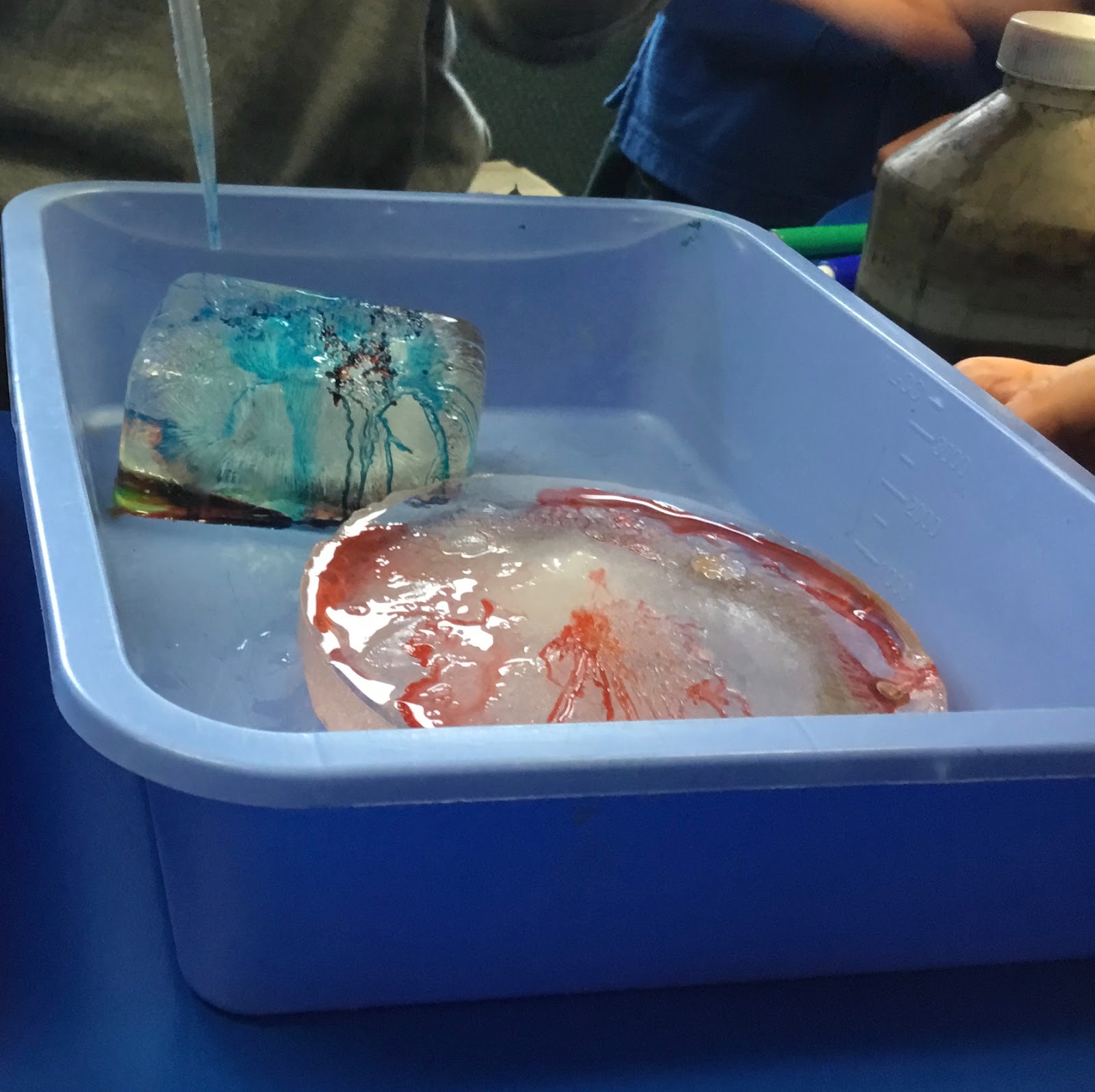
Today we looked at ice.
We observed ice and then conducted an experiment on the ice.
We mixed dye and salt then dripped it onto the ice. The salt cause the ice to 'melt' showing tunnels as the dye moved through the dye.
We could see the colours and noticed how the ice changed.


Here is a sample of the writing from our ice experiment.


Today we put dye in ice. 
It was colourful because we put salt in the dye and squirted it on the ice and the dye went into the ice. 
The salt was digging into the ice. It was really colourful.

By Charlie


Guess what? Today we talked about ice. 
When you put dye and salt on ice it will melt the ice. Then it will crack. 
When you touch ice your hands will freeze like ice. Salt actually can melt ice. Dye and salt also can melt ice. Ice can burn your hands. Your hand will stick to the ice.

By Will


In the experiment that we just did, we had some ice and dye. When we put the salt in the dye, the salt floated around. When we stirred the dye the salt dissolved. 
When we put it on the ice, the ice changed to rainbow. Then when we put so much salt in the red dye and we put some of the dye on the ice, it started to look like tomato sauce and blood.
We observed that when we put some salt on, it started to make holes and tunnels in the ice and it melted the ice.

By Ashley


I saw some holes and cracks on the ice. It felt cold. 
The brown dye was like cocoa cola. I liked the colour. 
The red dye and the salt looked like tomato sauce. 
We squeezed the dye and sprinkled the salt on the ice. It was amazing because the salt was eating into the ice.

By Petal

Guess what? We did an experiment today about ice. 
My favourite part was when Mrs Hinman dye and salt together. Then she mixed it. After, she put the dye on the ice. 
It looked really cool. The ice looked colourful! The salt melted the ice. It made tunnels, cracks and holes.

By Rynie

Today we did an experiment about dye and ice and salt. It was pretty amazing when we squirted the mixture on the ice!
The dye made tunnels!

By Mackenzie


Guess what? Today we talked about ice. 
It changed from a cold solid to a liquid. 
We put some salt into the dye and I felt excited! The dye made the ice melt! The ice had some holes. The dye was in the ice. It looked like a rainbow!

By April

Sunday, 1 July 2018

Inquiry
This week we had such fun being scientists and observing the changes that have happened when we made bread and popcorn.
We have been learning to use our 5 senses when we notice or observe what is happening.
We are also learning how to ask questions. We can now tell the difference between a question and a statement (or comment). A question is when we ask something and a statement is when we tell something.

Below are the photos taken during our experiences.


We red the story The Little Red Hen and discussed all the changes she made as she made bread.

Looking at the Bread maker.


The water and salt go in.

Flour

Measuring


Mixing

Yum - the end result.


We all agreed that it was tasty.

Alex carefully observing his piece of bread.


Popcorn

The corn kernels were hard, yellow and small.


When is was put in the popcorn maker it heated up and ...
pop.

The kernels changed to white, fluffy and bigger.


It tasted pretty good too - even if it gets stuck in you teeth.